Nội dung chính
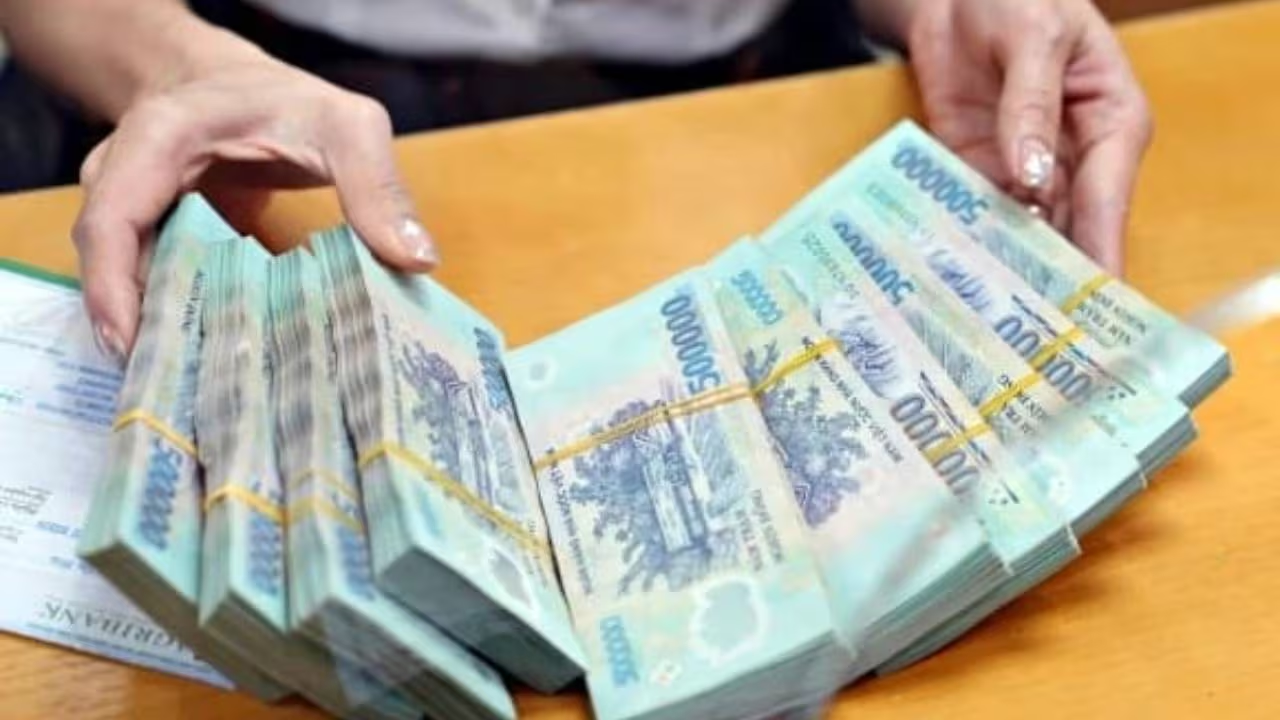
Vietnam’s fishmeal export reached US$300 million in 2025, highlighting a massive growth opportunity as China accounts for 90% of global imports.
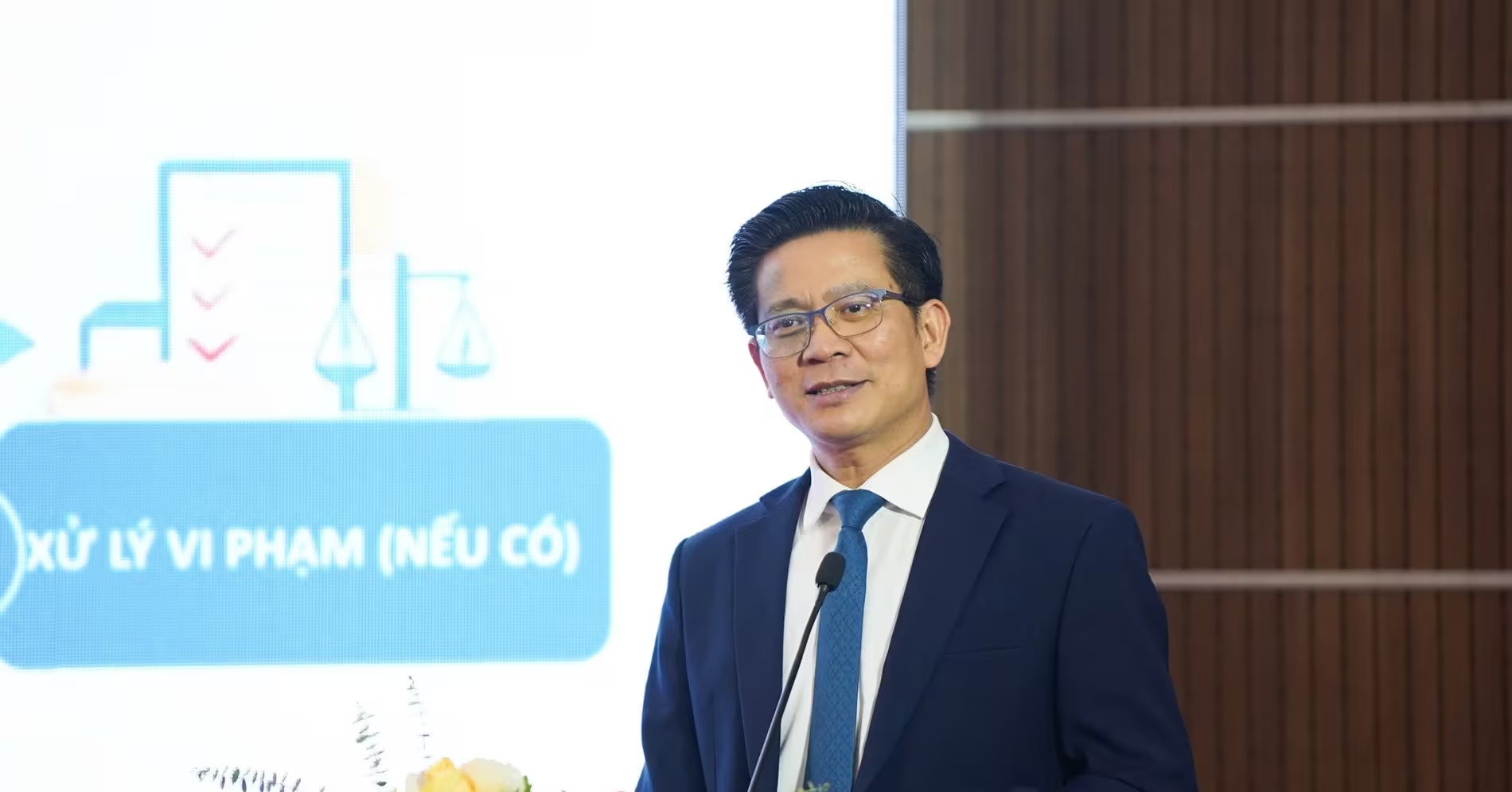
At the 2025‑2026 Fisheries and Aquaculture Conference, Nguyễn Hoài Nam, Secretary‑General of the Vietnam Association of Seafood Processing and Export (VASEP), announced that Vietnam’s fishmeal shipments hit roughly US$300 million in 2025. The figure only reflects overseas sales and excludes the domestic market, underscoring a still‑larger untapped potential.
Why fishmeal matters
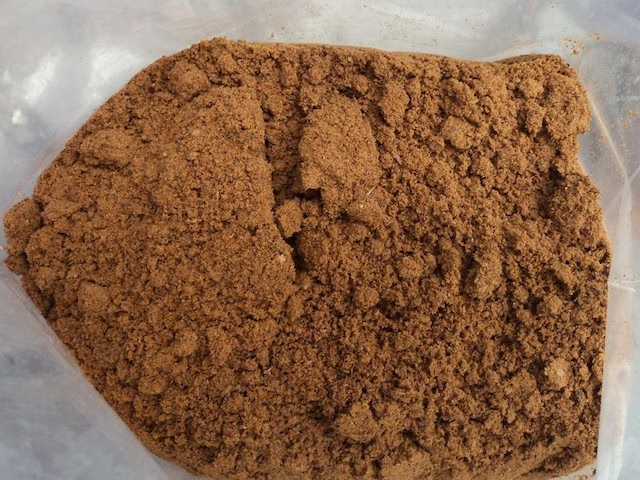
Fishmeal is a high‑protein, amino‑acid‑rich ingredient used primarily in feed for livestock, poultry, aquaculture species and even pets. It also serves as an organic fertilizer that improves soil fertility and fruit set.
Global demand landscape
- Peru is the world’s largest producer and exporter, supplying about 20% of global output, mainly from anchovy.
- China dominates imports, absorbing roughly 90% of the world’s fishmeal trade.
Vietnam’s production backbone
According to the Department of Fisheries and Aquaculture, total Vietnamese seafood production in 2025 reached 9.95 million t, a 3 % rise from 2024. Capture fisheries contributed 3.83 million t (stable), while aquaculture grew to 6.1 million t (+5.1 %). The national strategy aims for 7 million t of farmed seafood by 2030.
Rising aquaculture output fuels feed demand. In 2025, Vietnam produced 5.39 million t of aquafeed (1.4 m t for shrimp, 2.02 m t for pangasius, 1.97 m t for other species).
Regulatory gap
Even though fishmeal generated US$300 million in export value, it is recorded under the livestock feed code, not under the fisheries export statistics. VASEP has urged the Fisheries Department to coordinate with Customs to re‑classify fishmeal under the fisheries sector, in line with Circular 11 of the Ministry of Finance.
From waste to wealth – Vietnamese start‑ups leading the way
Several SMEs have turned fish processing residues into profitable products:
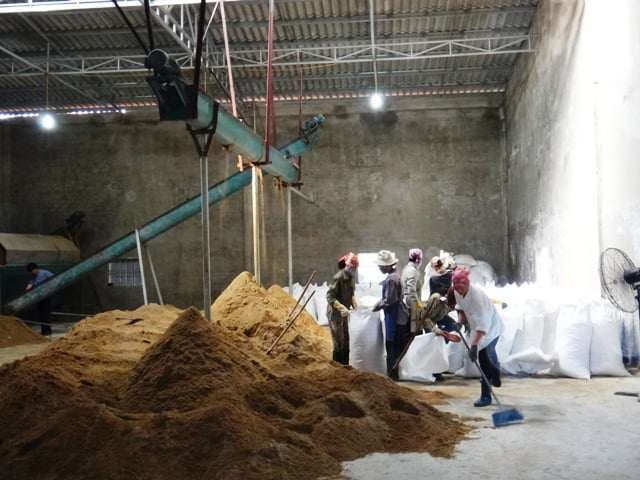
- Phúc Lộc Co., Ltd. (Tân Hải, HCMC) purchases ~60 t of waste daily, producing 4,000‑5,000 t of fishmeal annually, generating VND 72‑90 billion in revenue. With additional capital and technology, they could raise protein content to 64 % and cut national fishmeal imports by 140,000 t per year.
- Tứ Hải Co., Ltd. (Phước Thắng) refines shrimp heads, drying and exporting them to Japan at US$10 /kg, bringing in VND 10‑12 billion annually.
- The Southern Institute of Marine Research converts crab waste into chitosan—a high‑value biomedical and agricultural polymer—selling at up to US$1,000 /kg.
Future resource potential
Projections suggest that by 2030 Vietnam could generate:
- 650,000 t of shrimp waste valued at US$80‑100 million.
- 1.3 million t of catfish waste worth over US$500 million.
Beyond fishmeal, emerging applications include peptide extraction, enzymatic bioproducts, biodegradable packaging from shrimp shells, and fish‑skin leather for fashion.
Policy levers for a sustainable blue economy
According to Prof. Phạm Quốc Huy, head of the Southern Marine Research Institute, coordinated tax incentives, green credit lines, and technology subsidies are essential. When government, academia, and industry align, “what is now considered waste can become green gold,” driving a circular economy, protecting marine ecosystems, and positioning Vietnam as a world‑class seafood powerhouse.
Are you an investor or entrepreneur ready to tap into Vietnam’s fishmeal renaissance? Share your thoughts below or contact us for a deeper dive.